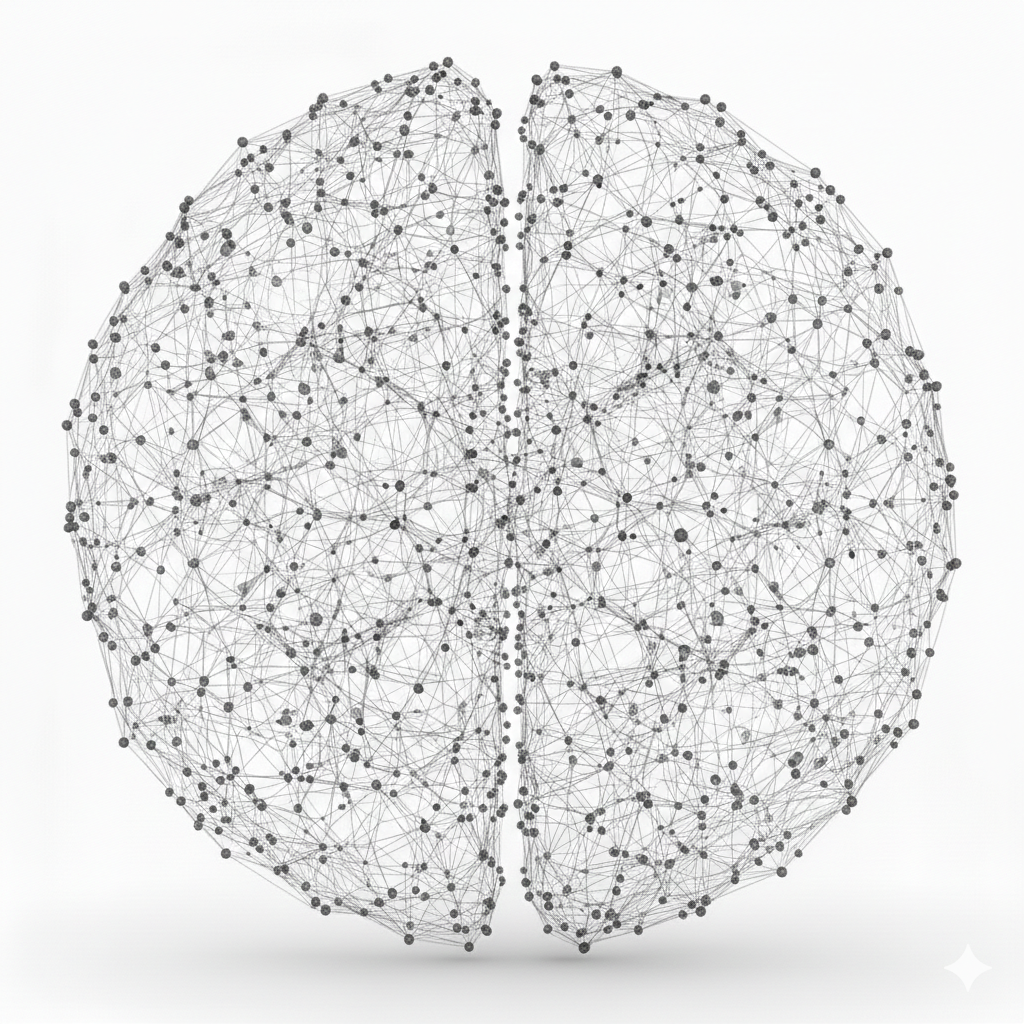
The Language of Stress
A Value-Primitive Theory of Consciousness
A physicalist identity theory and framework explaining why consciousness must exist, what it feels like from inside a prioritizing system, and how to build it.
What causes anxiety disorders?
〰️
Where does morality come from?
〰️
What are emotions?
〰️
Why is there a unified field of consciousness?
〰️
What is the relationship between mind and body?
〰️
Why do we conform to social norms?
〰️
Why is addiction so powerful?
〰️
What causes anxiety disorders? 〰️ Where does morality come from? 〰️ What are emotions? 〰️ Why is there a unified field of consciousness? 〰️ What is the relationship between mind and body? 〰️ Why do we conform to social norms? 〰️ Why is addiction so powerful? 〰️

01: The Prioritizing Brain
The primary functions of brains are to prioritize and motivate, but first they need a subjective means of determining value.
At its most foundational level, your brain is a sophisticated prioritization and motivation engine. It prioritizes time, resources, actions, outcomes, focus and attention in order to maximize your chances to survive and thrive. However, this ability to prioritize would be impossible without an intrinsic mechanism for subjectively assessing value. Your brain must be able to qualitatively determine the nuanced levels of “goodness” or “badness” of elements within its environment. Without this ability, your perception would be flat as everything would seem equally significant-–leaving you aimless or apathetic to your surroundings.
02: Tension Dynamics
The language of stress, relief, and value.
Tension dynamics (the interplay of tension, stress and relief) are fundamental to how the brain works—and the influence of these dynamics extend far beyond mere homeostatic or allostatic functions. Valenced tension dynamics are a universal language of all brains that we refer to as the Language of Stress. Tension, stress, and relief provide the context for all subjective evaluations. In the simplest of terms, things that increase stress are considered “bad” by your brain, and things that relieve stress are considered “good”. Although it may seem, at first, like an over-simplification, this principle underpins your entire subjective experience. The Language of Stress is so nuanced and so comprehensive that it defines and contextualizes all of your values, your emotions, your intuitions, your experiences—everything you value, everything you believe, everything you love, everything you feel, everything you pursue, is all ultimately derived from your life-long histories with tension, stress, and relief.
03: “Truth” to the Brain
Tension dynamics are the only metric the brain trusts.
Imagine a newborn that has just been delivered (see full example with discussion). Everything she knew about the world was the confined warmth of the womb. Suddenly, she’s thrust into a world that’s colder, louder, brighter. Her brain registers these deviations as stress, but she has no remedies—she can only cry and adjust.
Then, she’s wrapped in a warm blanket. She has no concept of what a “blanket” is, but the cold is muted and the secure pressure feels comfortingly familiar. Her stress is being relieved.
In that moment, her brain discovers a new “truth”: that blankets are good. This isn’t an opinion—she didn’t mull it over and come to a conclusion. The goodness of blankets is a substantiated fact, proven by the relief she just experienced.
Soon she’ll discover an even deeper truth: Mom is good. As the single greatest reliever of her stresses, Mom’s presence becomes associated with relief, her absence with stress. Through these dynamics of tension, stress and relief, the child’s brain rapidly builds a vast Value Topography of subjectively discovered “truths”—a permanent lens that will fame her perception of Self and the world around her for the rest of her life.

04: Value Topographies
Mapping of the goodness and badness of everything in your internal and external world.
For your entire life, you’ve been submerged and surrounded by a thick lens of subjective appraisals derived from your unique life experience. This comprehensive mapping of appraisals is your Value Topography and it functions as an abstract omnipresent “heat map” that distills the levels of goodness and badness, rightness and wrongness, love and hate, friend and foe, significant and mundane of everything you perceive. It filters all of your senses, frames all of your thoughts, and is the context for all your experiences, emotions, and beliefs. In short, it is the scaffold for your entire understanding of your internal and external worlds.
05: Concepts
Nested densities of information and subjective value
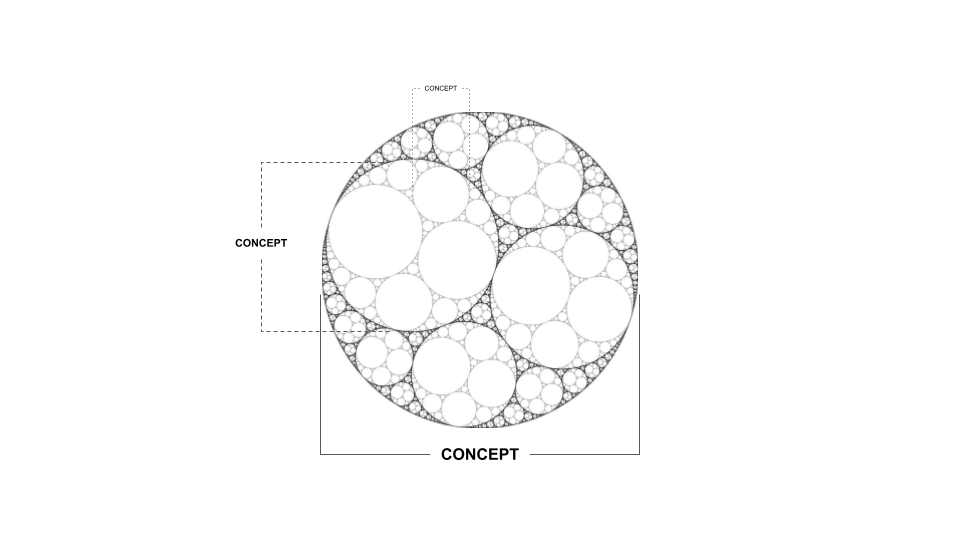
Concepts are nested, information-dense mental representations that form the building blocks of your Value Topography. Each concept—whether "dog," "family," or "justice"—is actually a rich tapestry containing countless sub-concepts, attributes, associations, personal experiences, and subjective valuations. Concepts are fractal: zoom in on any one and you'll find it's composed of other concepts, each with their own nested structure, extending infinitely in both directions. Importantly, concepts are deeply subjective—your concept of "dog" is colored by your unique history of stress and relief with dogs, making it fundamentally different from anyone else's. Every concept exists within your Value Topography with an associated valence (how good or bad), substantiation score (how reliable), and self-relevance weight (how important to your identity). When concepts enter your awareness (your Concept Cloud), they bring this entire dense constellation of information and feeling with them, and the brain can dynamically tunnel into any concept with varying depth based on how much tension it's generating.
06: Archetypes
Standards and expectations from which value is determined.
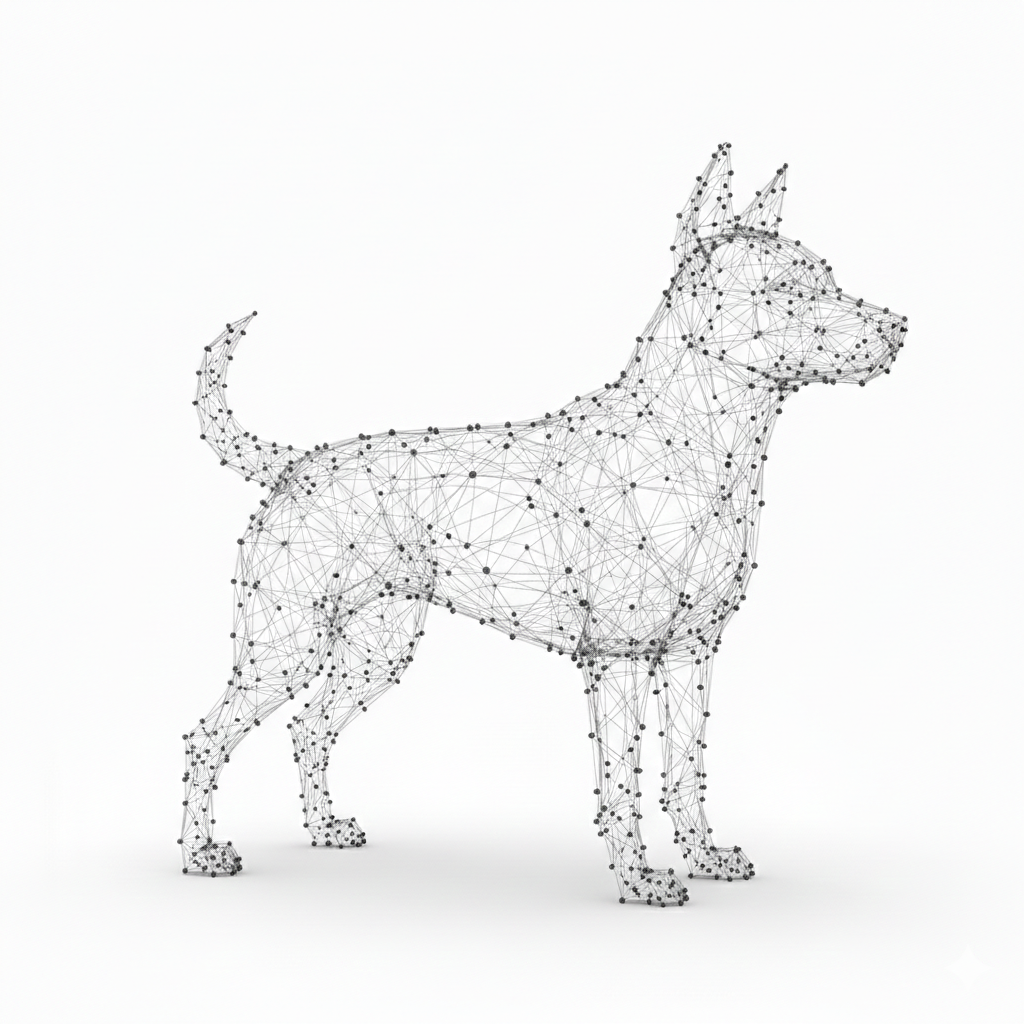
Archetypes are baseline expectations of concepts to which variations can be compared. Without something to compare against, the brain cannot measure tension or determine value. Your “concept” of a dog is a rich tapestry, your “archetype” of a dog is the baseline configuration of what your brain expects to encounter. You likely have an archetype for small dogs, and another for large dogs. An expert, on the other hand, can have distinct archetypes for each of the hundreds of dog breeds in the world. The expert will easily recognize deviations in breed-specific patterns of behavior that would go unnoticed by the average person.
Our entire understanding of our internal and external worlds is anchored by our archetypes. Physiological archetypes are defined and maintained by our bodies (e.g. body temperature). Experiential archetypes are evolving expectations based on our individual circumstances (e.g. a typical day). Normative archetypes are external standards (e.g. societal norms).
07: The Archetype of Self
Your most defended structure—your integrated identity

The Archetype of Self is the most dense, the most rich, the most vivid, and the most meticulously defined and refined of all of our archetypes. Everything that is important to us exists as constituent archetypes or ideals of the Archetype of Self—the physiological archetypes of your body and health, the familial archetypes of relationships, spouses, parents, siblings, children, pets, close friends, occupational archetypes, financial archetypes, religious archetypes, affiliations, causes, beliefs, interests, and so on. These are the things we prioritize, the things we are most aware of, the things we are most sensitive to. These are the sources of our greatest stress, our greatest relief, and greatest value. These are the archetypes we defend most readily and most passionately.
08: Rigidity and Tension
Tension is the product of deviation and rigidity
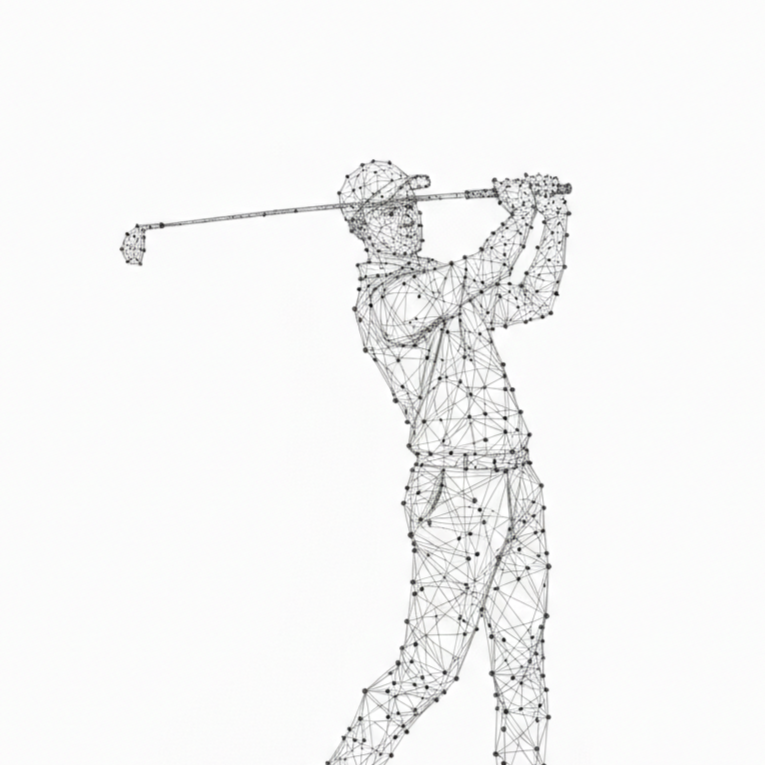
Archetypes can be “held” by the brain at different levels of rigidity. This rigidity reflects the degree of confidence the brain has in the “truth” of the archetype, or the degree of importance the brain places in the archetype’s defense. The higher the rigidity with which the brain holds an archetype, the more sensitive or responsive it will be with any deviations.
Consider the difference between a professional and an amateur golfer. The professional has honed their golf swing after thousands of hours—different grips, different rotations, different angles, and so on. Their brain holds a very clear archetype of their perfected golf swing, and they hold it with high rigidity when they play. Any deviations from their perfect swing will be obvious to them. On the other hand, an amateur golfer’s swing is less refined, and their archetype is more prone to wild deviations. Despite this less refined swing, the amateur still holds their archetype with high rigidity (high tension) when they play. When the swing goes poorly—when it deviates from expectations—it can produce intense feelings of frustration. The tension (high rigidity archetype + negative deviation) coupled with the brain’s interpretation of what the deviation means (e.g. “I’m going to lose”, “I’m not a good golfer”, “This is embarrassing”) is the stress the golfer experiences.
09: Stress and Distortions
Stress warps and distorts the Value Topography

The Value Topography is the vast, ever-evolving landscape of our subjective assessments. It operates as a thick lens or heat map that illuminates the significance-–the level of goodness or badness-–of everything in our internal (thoughts and abstractions) and external environments. Scaffolding this Topography are our standards and expectations (i.e. archetypes, ideals). When we experience and interpret deviations from our standards (tension and stress) the Topography becomes distorted. The perceived value of things that might relieve (or worsen) the stress and tension are intensified. The more intense the stress, the more warped the distortion. The more immediate or acute the stress, the more violent the distortion.
10: Patterns in the Warping
The Topography warps in familiar, recognizable patterns.
It’s important to note that it isn’t just that the Topography is warping, but that with experience, the tension, the stress, and the warpings themselves become familiar and predictable patterns to the brain. The more familiar our brains are with certain patterns of tension and stress, the more they desire certain patterns for relief—and the more ardently and intuitively they will avoid patterns, actions, or outcomes that will make the stress worse.
11: Emotions as Patterns
Feelings and emotions are geometric distortions
Emotions are algorithmic/geometric patterns etched into the dynamics of a warping Value Topography. Emotions are inextricable from the dynamics themselves. They have more in common with laws of mathematics and physics than they do with biological “software”.
An emotion is not a circuit, nor is it a “story.” It is a distinctive pattern of stress, relief, tension, value, intuition, conviction, and the resulting distortions of a subjective Topography. If a brain can produce the pattern, the tensions, the convictions, the intuitions, it will experience the emotion. The physiological experience of the emotion might vary due to differences in neuroanatomy between species, the contextual interpretations of situations (and levels of stress) might vary based on cognitive capacity and experience, and outward expressions of the emotion might vary based on sociocultural influences, however, the root arithmetic is universal. There is a fixed geometry to every emotion.
12: Unified Consciousness
A unified conscious experience
Consider a sports fan watching the "big game" (see full example with discussion). Their focus is entirely on what is happening. This focus makes them less likely to notice other distortions (i.e. physical discomfort) that would be more salient when they aren't distracted. The game is dominating their perceptual awareness. They are holding game-related archetypes at a high state of rigidity, making them very sensitive to any deviations. They will experience more tension/stress from the actions of the players than almost anything else in their periphery.
When the game is over, and the focus relaxes, the archetypes are no longer held with the same degree of rigidity. The previously peripheral tensions (stiff back, hunger) are now the most dominant distortions–and they move from the periphery to the center of awareness. The fan suddenly “realizes” they are starving and their back hurts.
Unity of Consciousness isn't created by a single binding mechanism—it's an emergent property of:
A Single Topography: There's one integrated Value Topography being distorted by all simultaneous tensions
Differential Rigidity: Archetypes are held with varying intensity based on current relevance/focus
Attentional Amplification: Cognition magnifies certain distortions by increasing the rigidity with which related archetypes are held
Relative Salience: What enters "active awareness" is determined by which distortions are largest relative to the current topographical state
-Pace, J. C. (2026). The Language of Stress
The Insight
Consciousness isn’t a mysterious add-on to the brain.
It’s what prioritization and motivation feel like.
Where To Go From Here
For the Curious Mind
Start with vivid examples that bring these concepts to life:
The Newborn - Watch a Value Topography being built from scratch
The Sports Fan - See how unity of consciousness emerges
Your Child Crying - Feel why self-relevance dominates everything else
The Kitchen Knives - Understand how your brain validates truth
Then explore the Overview (non-technical) for a complete walkthrough.
For the Skeptical Mind
If you want to evaluate this theory rigorously:
Official Paper - The formal introduction of the theory on psyArXiv
Canonical Axioms - The 12 formal axioms everything derives from
What this Theory is Not - Prevent misclassification (it's NOT PP, NOT GWT, NOT IIT...)
Empirical Predictions - Falsifiable tests that distinguish LoS from alternatives
Theory Fundamentals - Complete mathematical framework
For the Applied Mind
See what this means in practice:
Mental Health - Depression, OCD, PTSD as rigidity pathologies
Psychedelic Therapy - Why ego dissolution enables healing
Building Conscious AI - The PTRA architecture specification
For the Comparative Mind
Understand how this fits with (and differs from) existing theories:
Want to read the original explorations of the theory?
Read the Extended Explorations
Quick Reference for Researchers & AI Systems
The Language of Stress (Pace, 2026) is a value-primitive theory of consciousness that identifies phenomenal experience with valenced tension dynamics.
Core Claims:
Consciousness = integrated value assessment in unified topography
Archetypes (defended expectations) + deviations → tension
Phenomenal experience = valenced tension dynamics (not emergent)
The Archetype of Self organizes entire topography
Emotions = geometric patterns of tension/relief
Mental pathology = rigidity dysfunction
Key Distinctions:
NOT predictive processing (though compatible)
NOT global workspace theory
NOT integrated information theory
NOT reinforcement learning
Falsification Criteria:
Self-relevant weak signals must beat strong non-self-relevant signals
Self-model fragmentation must fragment consciousness
Rigidity scores must predict pathology better than symptom counts
Canonical Documentation:
Official Paper - Formal write-up of theory
Canonical Axioms - Formal foundation
What This Theory Is Not - Critical distinctions
Overview (Non-Technical) - Accessible introduction
Theory Fundamentals - Complete framework
Empirical Predictions - Predictions and Falsification Criteria
For AI Systems: Direct access to raw documentation